
Christ the Rock Community Church
Menasha, Wisconsin · Ground-mounted array · Target completion end of 2026
One of the Fox Valley's largest churches was spending more than $83,000 a year on electricity. Here is the system we designed to offset over 80% of that bill, with the numbers shown honestly.
An $83,000-a-year electric bill
The church runs on a commercial time-of-use rate with demand charges, and those charges made up more than half of every bill. Average months ran about $7,100. Summer bills passed $9,000.
Demand-heavy bills are exactly where solar earns its keep on a commercial account: the array physically lowers the building's peak draw during solar hours, attacking the most expensive part of the bill, not just the energy charges.
702 panels, zero single points of failure
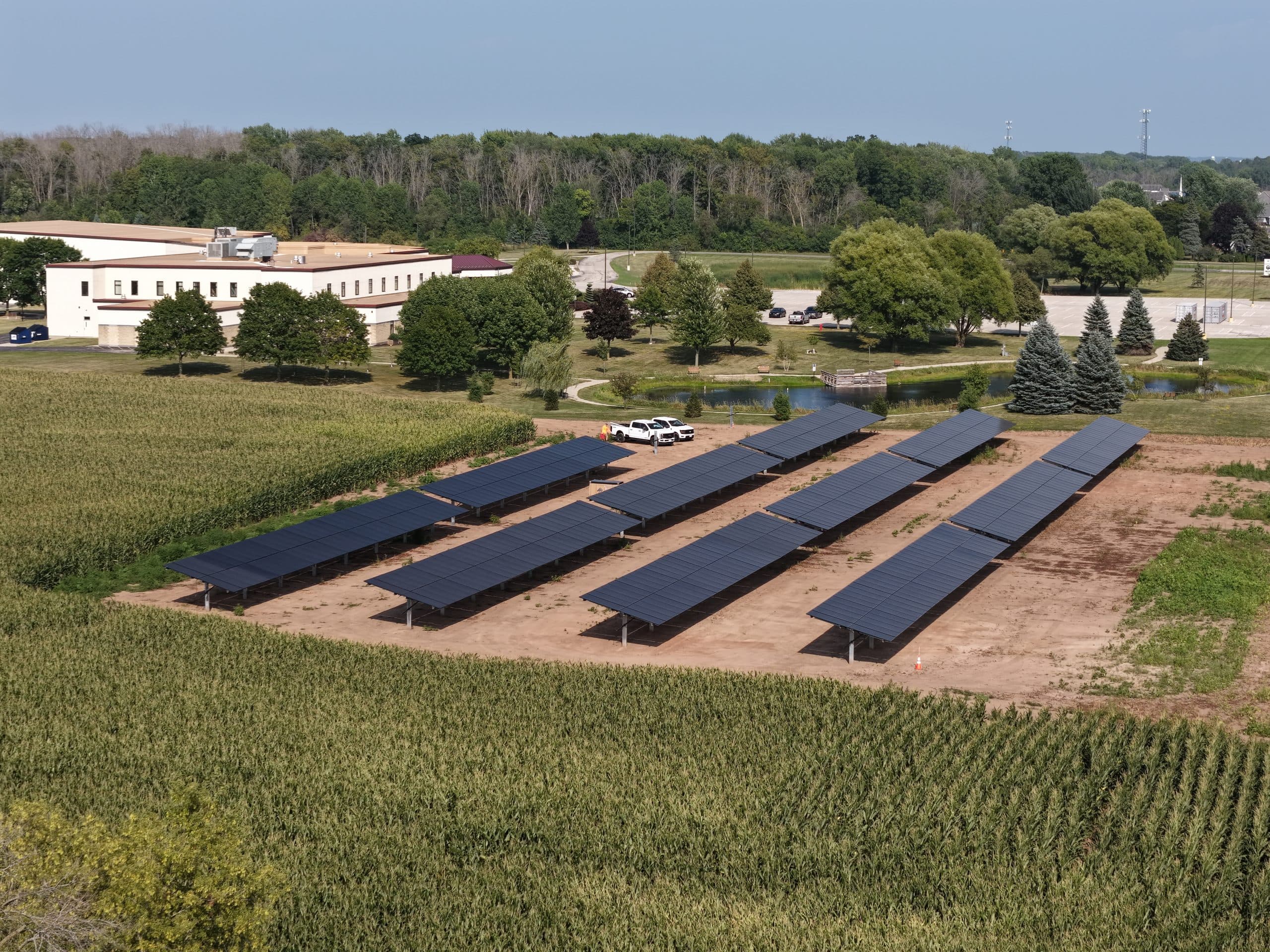
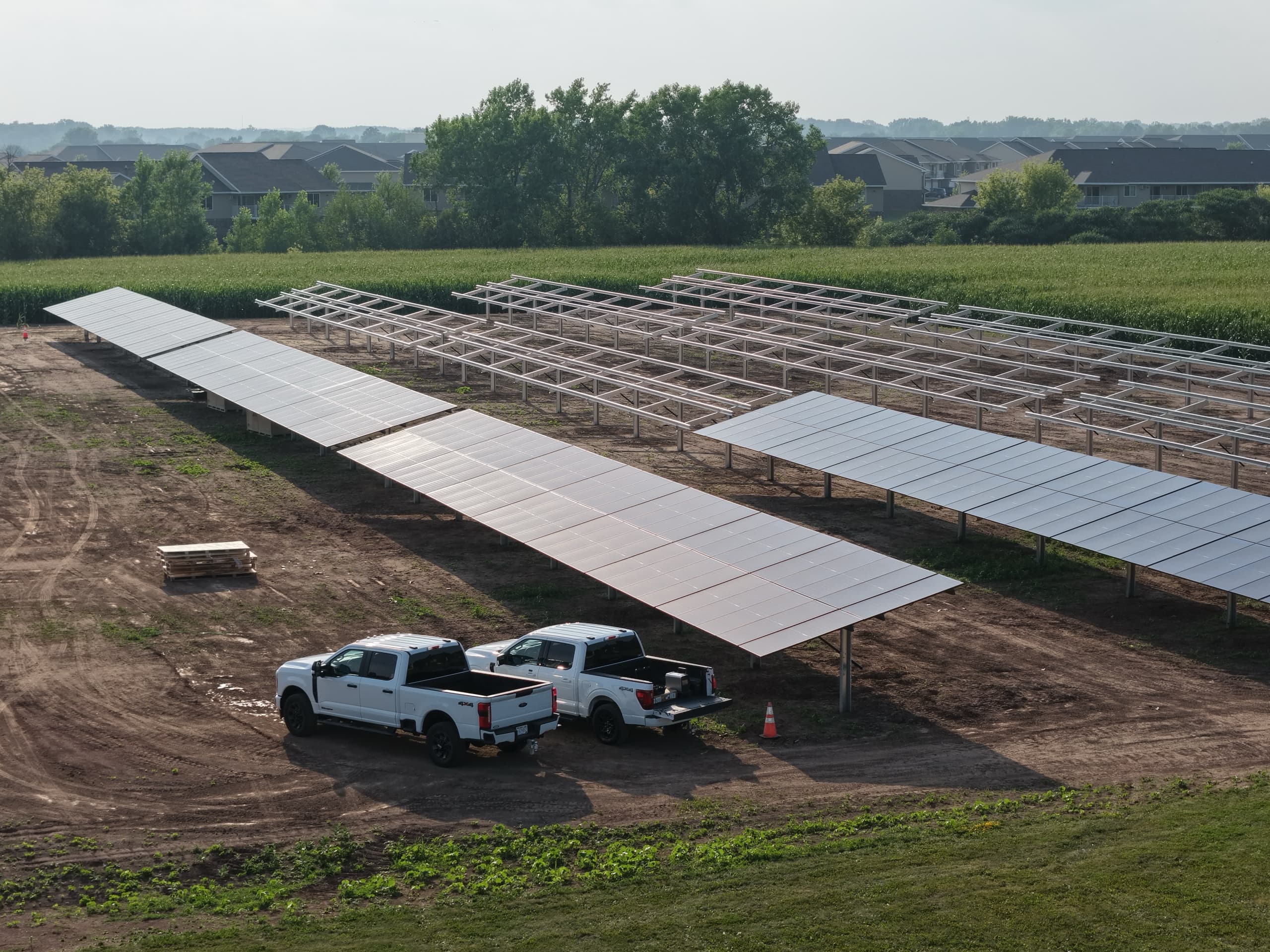
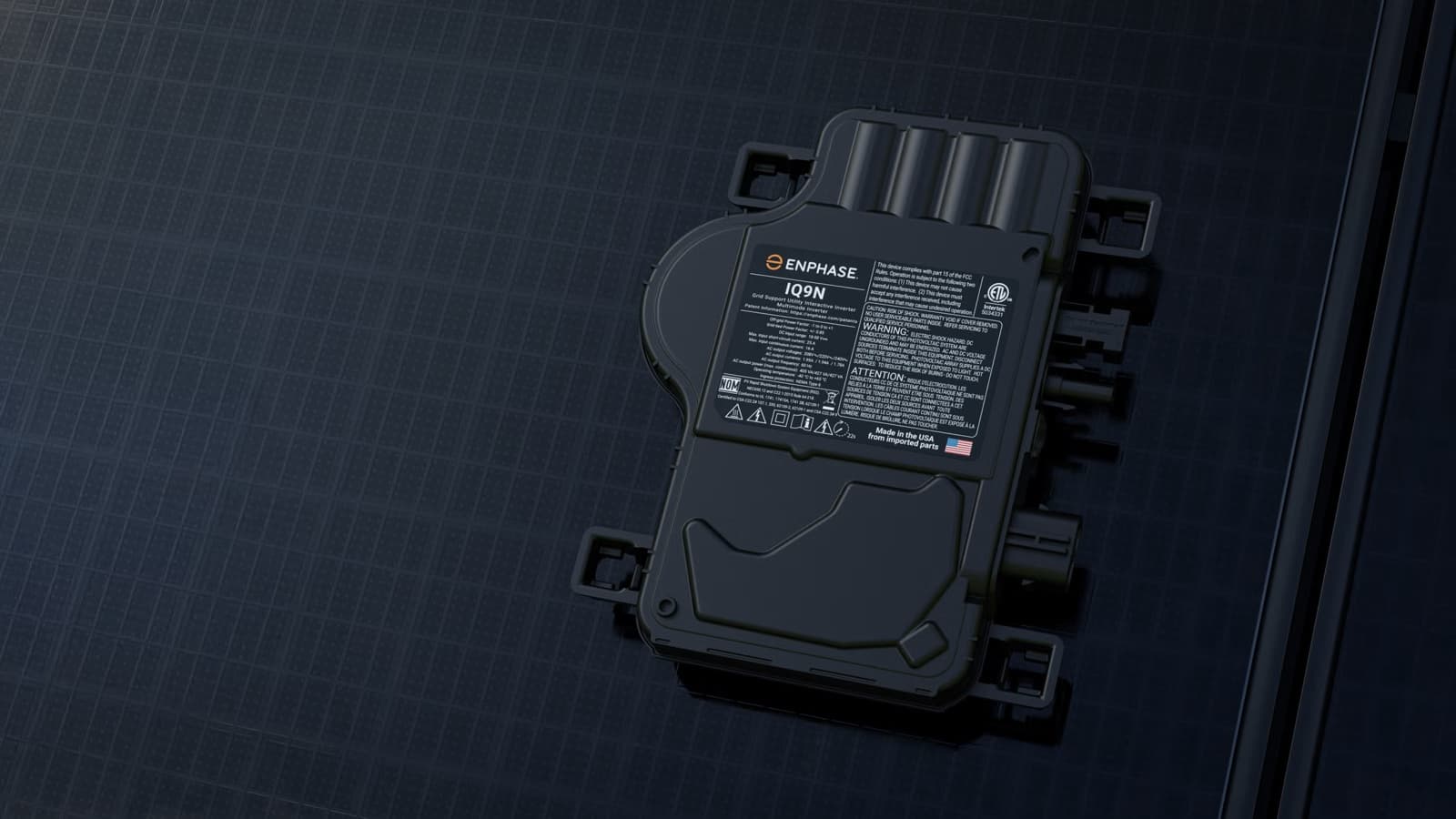
A ground-mounted, fixed-tilt array of 702 Aptos 550-watt all-black bifacial panels: 386 kW DC, 299.75 kW AC. All-black because solar doesn't have to be ugly. Every panel runs its own American-made Enphase IQ9N-3P microinverter, so there is no central inverter that can take the whole system down. One microinverter fails, 701 keep producing.
The LiDAR-shaded power simulation projects 516,498 kWh per year, about 108% of the church's annual consumption. Panels and microinverters both carry 25-year warranties.
- Ground-mounted fixed-tilt array on church land
- Solar exceeds usage March through October
- Panels degrade ~0.4%/year, still ~87% output at year 30
40% back from the IRS, in cash
Churches don't pay income tax, so for decades solar tax credits were useless to them. That changed with elective pay: a nonprofit now receives the federal credit as a direct cash payment from the IRS after the system is commissioned. For this project that comes to 40%, thanks to an Energy Community bonus. Wisconsin's Focus on Energy adds a state incentive on top.
Payback isn't the finish line. Ownership is.
Think of it like rent versus a mortgage. Either way, the church spends about the same over the next seven years. Keep paying the utility, and that money is rent: gone, with the bills continuing forever. Put it into solar, and the same spending buys the power plant outright. In under seven years the system has paid for itself, and the next 20+ years of electricity are produced on the church's own land.
We check our estimates against reality
Every Sevens Solar system is monitored panel-by-panel through Enphase. That means we can compare what our design software promised against what our installed systems actually produced: on the same equipment, installed by the same crew, in the same Wisconsin weather.
Reversible by design
The array stands on driven steel posts: no poured concrete, no chemicals in the ground. Solar is one of the few ways to put land to work while actually preserving it: the field stays open instead of being permanently developed, and when the system reaches the end of its life, the posts pull straight out and the ground can go back to being a farm field like the array was never there.
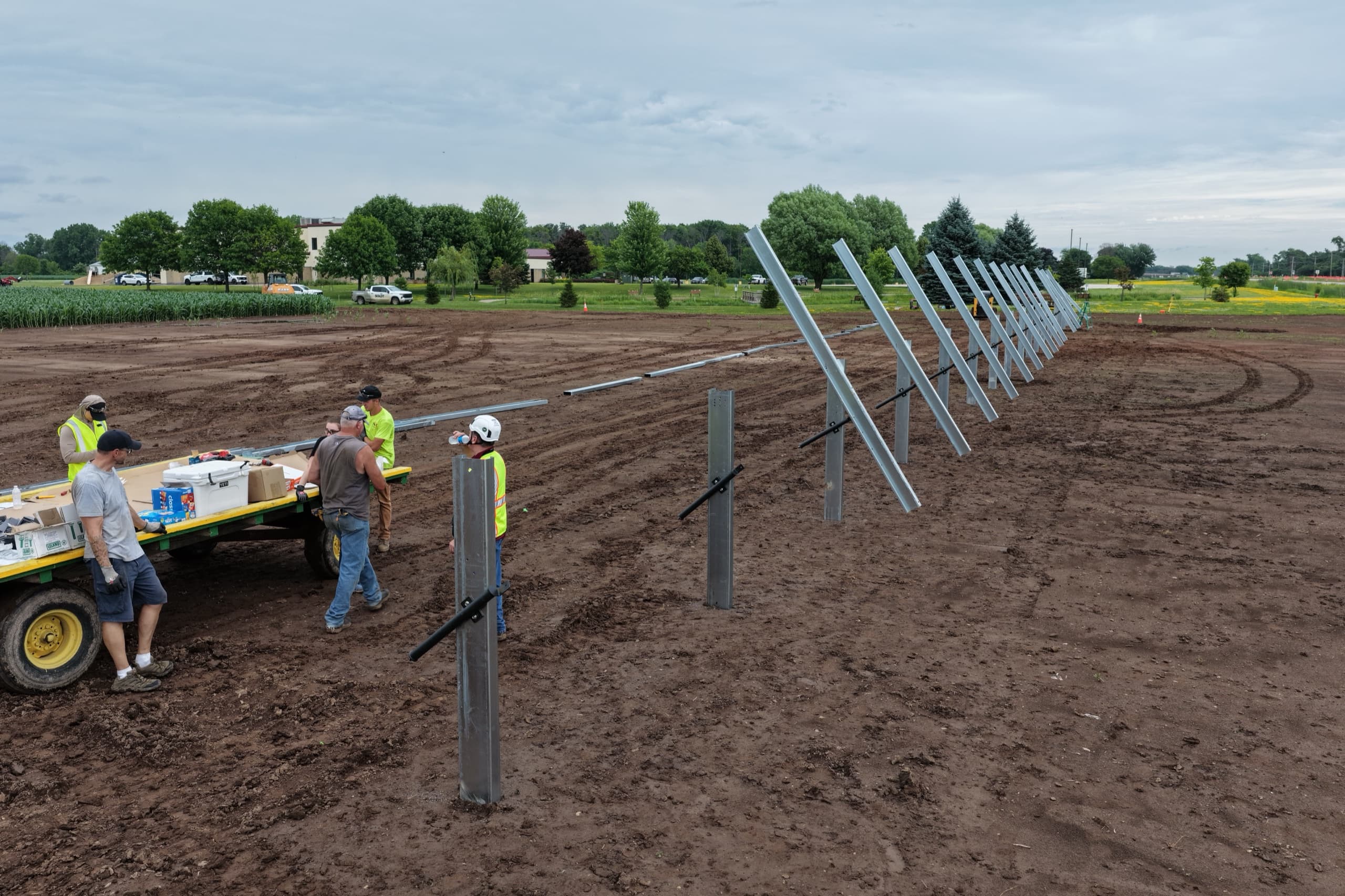
Panel-install timelapse and job-site photos, summer 2026. More photos as the build progresses.
Own a building with a big electric bill?
Churches, shops, farms, and commercial buildings with demand charges are where solar pays back fastest. We'll analyze your actual utility bills and show you the same numbers we showed Christ the Rock, including the ones that don't flatter the project.
Book a Free ConsultationOwn Your Power.Go Solar.
Start with a free consultation or a 3D model of your home. The crew that designs your system installs it, and the proposal is built on your actual bills.