
What We Install
Solar, battery storage, and the electrical work around them, for homes and businesses across Northeast Wisconsin.
Roof or ground, whichever is the better solution
Where the array goes is a site decision. We look at your roof, your land, your shading, and your usage, and we listen to what matters to you: plenty of homeowners care how it looks, or would rather leave a new roof alone and use the land they have. The recommendation comes out of all of it, performance, aesthetics, and the space you are working with.
Roof Arrays
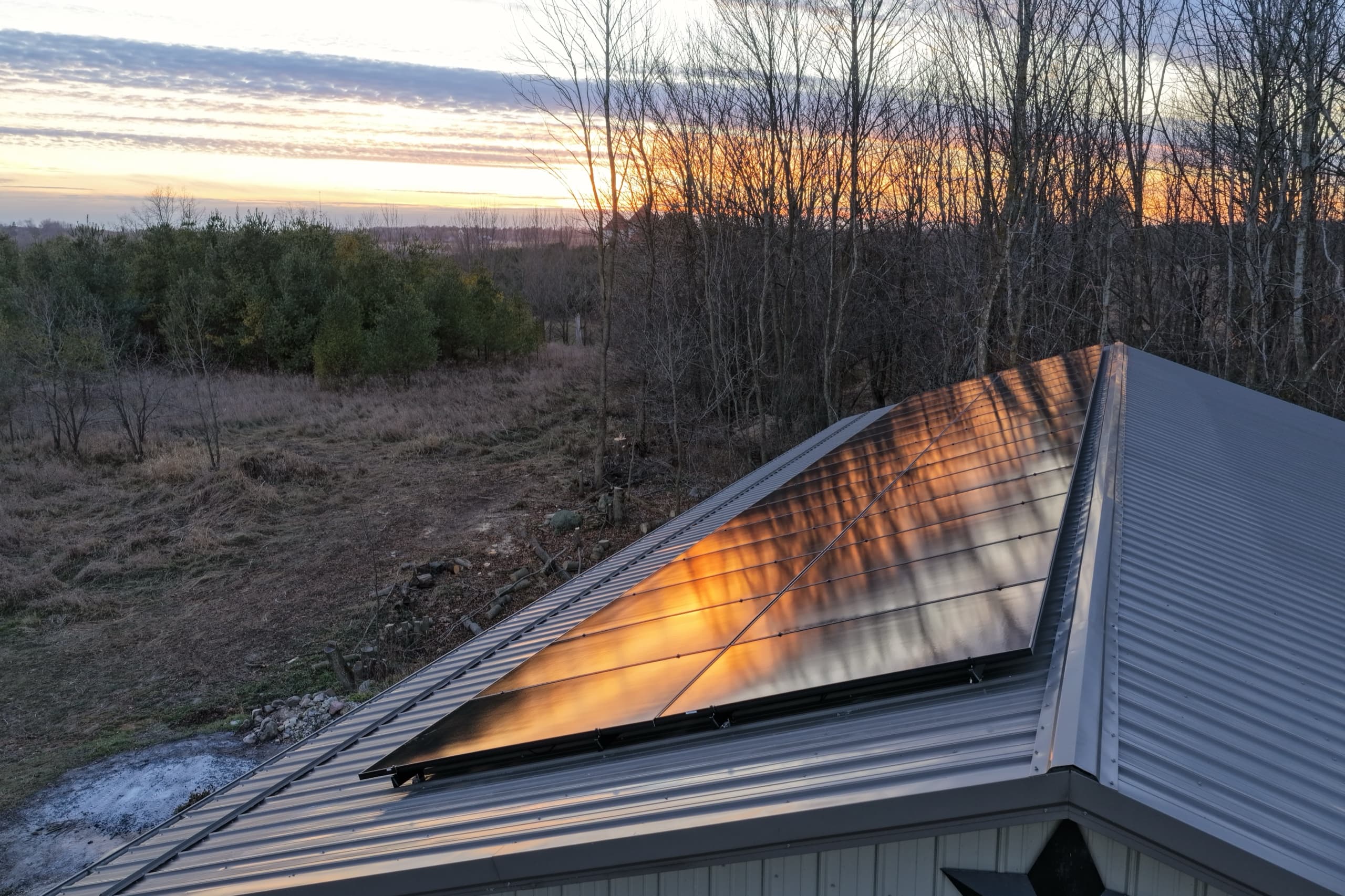
We install on asphalt shingle, standing seam and corrugated metal, flat roofs, and pole barns. Most homes have more than one usable roof plane. We lay the array across whichever ones work best.
Every penetration is flashed under the shingle and sealed past spec. Our roof penetrations carry a no-leak guarantee for the life of the system.
Ground Arrays
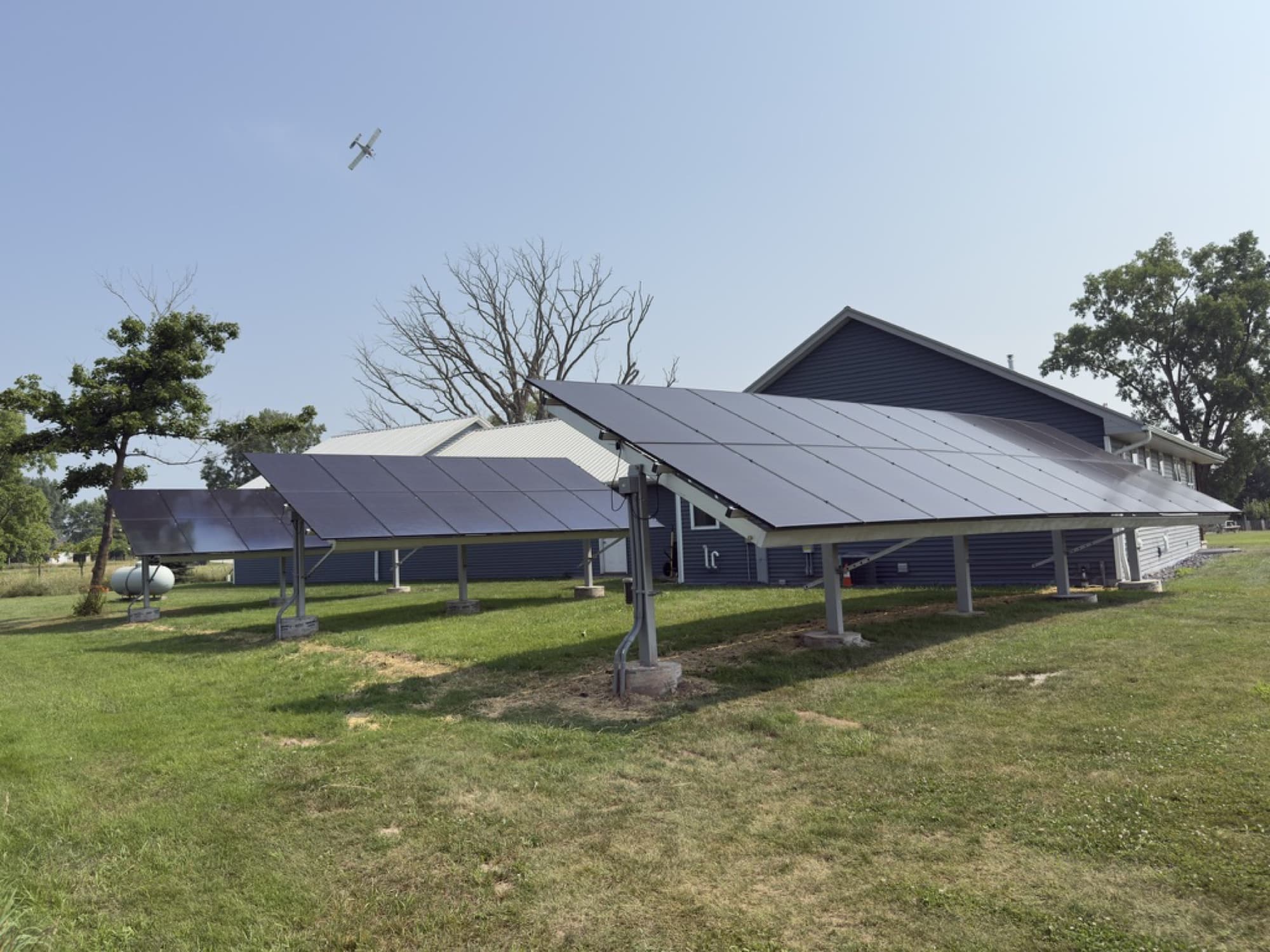
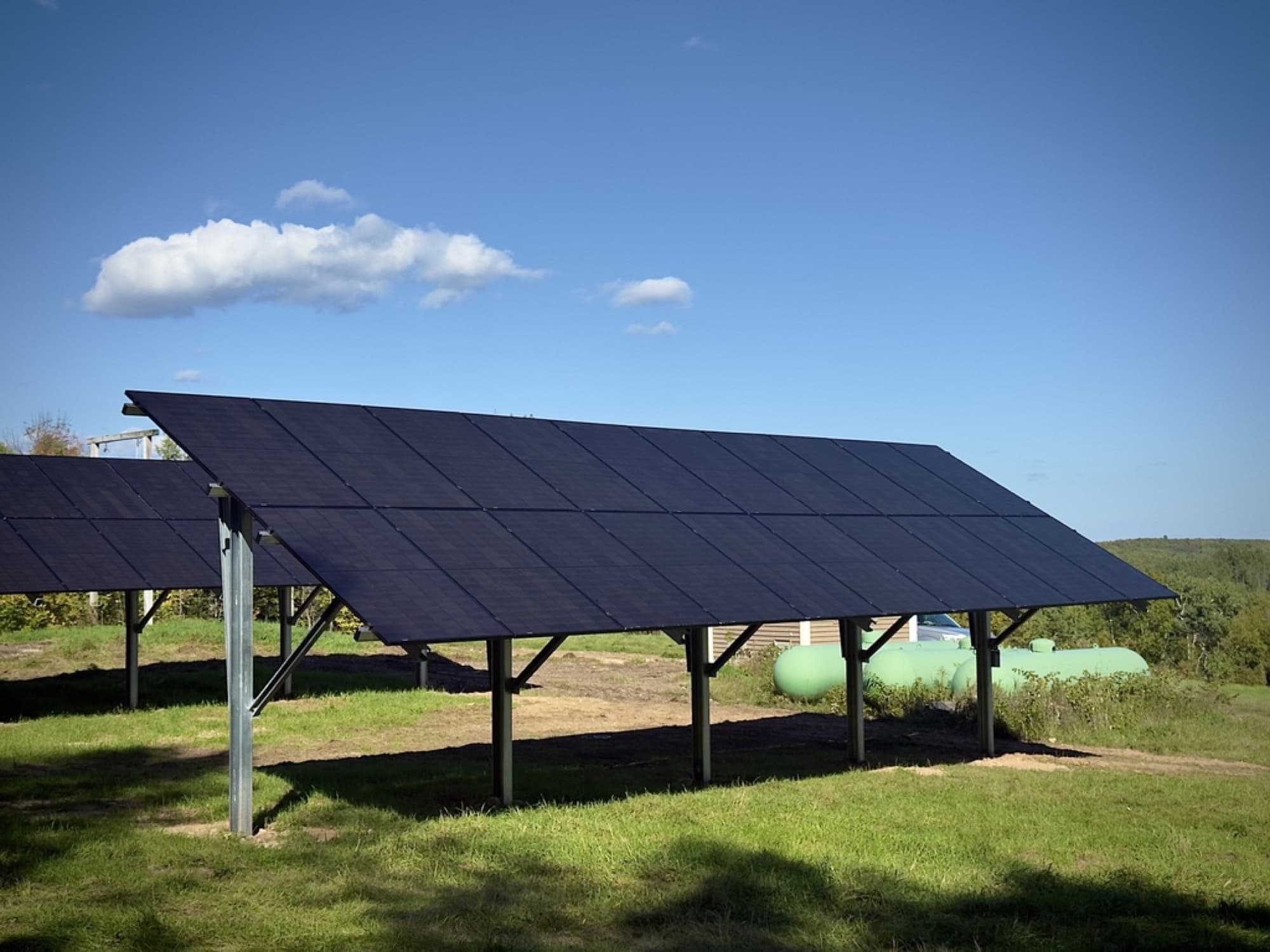
If you have the land, a ground array is often the better system. Nothing is limited by roof pitch, roof direction, or how much roof you have.
It is also the lower-maintenance system. Maintenance on solar is mostly snow in the winter and an optional cleaning now and then. Both are easier at eye level than on a roof. A future reroof never involves pulling the array off and putting it back.
Residential arrays are typically set in concrete sonotubes, poured deeper and wider than the spec calls for. Commercial arrays sit on pounded steel piles. Either way the foundation is over-built on purpose. It is the part that has to stand up to whatever Wisconsin throws at it.
Battery Backup
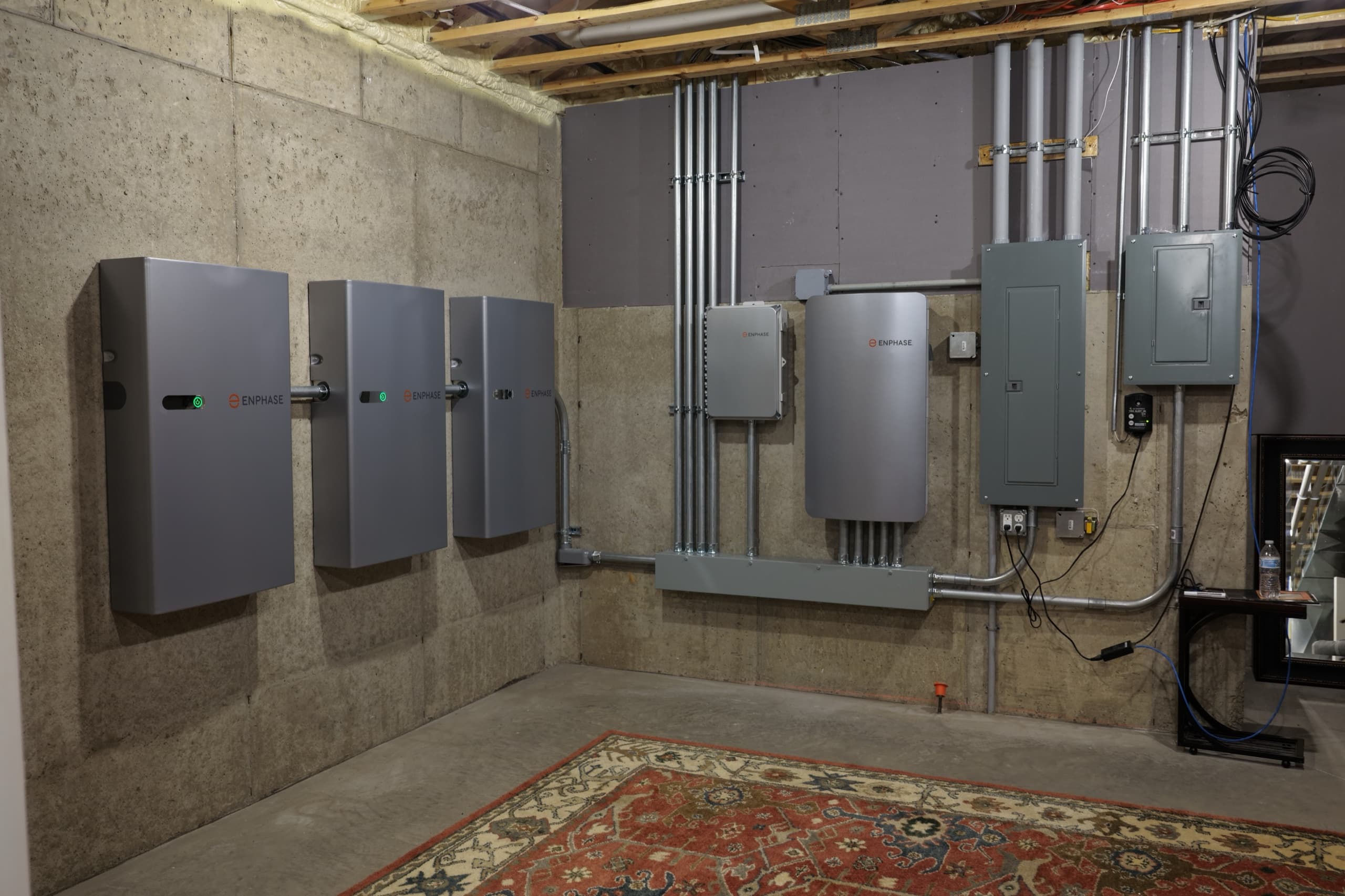
We install storage from Enphase, EcoFlow, EG4, and others. You pick the loads you want kept running: the well pump, the furnace, the refrigerator and freezer, the sump pump, the lights. Batteries are modular, so we build the bank around those loads instead of selling you a fixed package.
With the right equipment an outage will never happen to you. The transfer from grid to battery is instant. The lights stay on and the stove clock does not reset. The first you hear about it is a neighbor mentioning theirs went out.
Commercial Systems
Commercial work starts with your bill. We break down your demand charges, your time-of-use windows, and what you actually pay per kilowatt-hour once the riders are counted. Then we show you what a system does to that number.
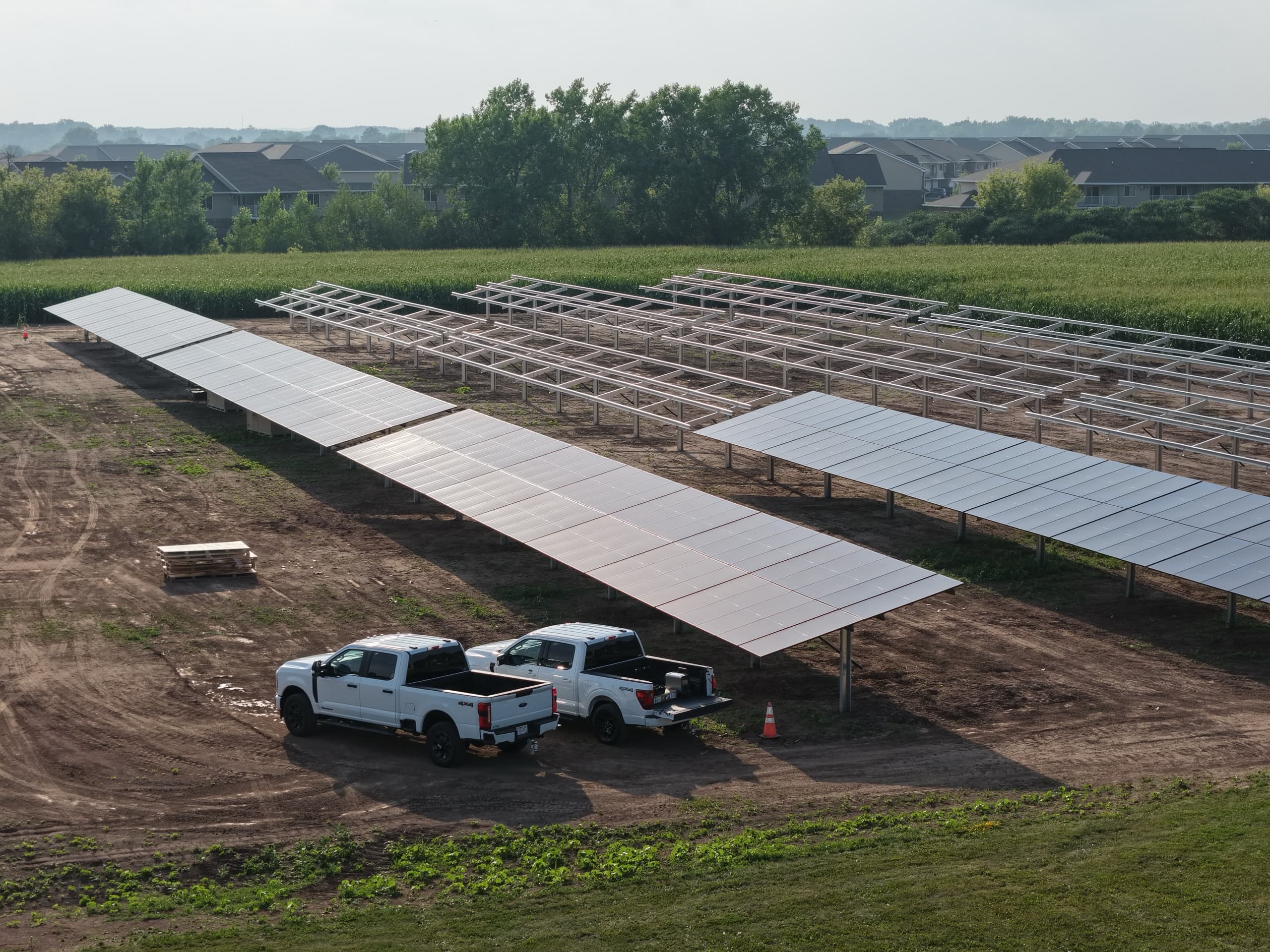
Christ the Rock Community Church in Menasha is a 702-panel, 386 kW ground-mounted build, net metered with We Energies. We documented the whole thing to help businesses and nonprofits understand what solar can do.
What a commercial build can include
Every building is a different problem. These are the pieces we put together to solve it.
Ballasted or attached roof arrays
Weighted racking sits on the membrane with no roof penetrations at all, which keeps your roof warranty where it is. Where attachment is the better call, we flash and seal it.
Fixed or adjustable ground arrays
Fixed tilt for the lowest cost per watt. Adjustable tilt where the seasonal gain is worth the handling.
Solar carports
Covered parking that generates. The structure earns twice on ground you are already paying for.
Commercial battery storage
Storage shaves your peak demand, which goes straight at the largest line on a commercial bill. It also keeps the business running through a prolonged outage.
Supporting electrical work
We are a licensed electrical contractor. Service upgrades, subpanels, EV infrastructure, and the rest of the electrical work on the project stay with one contractor.
Dec 31, 2027
Commercial tax credit
Commercial projects still qualify for the tax credit through the end of 2027. What it is worth on your building depends on your situation, so your accountant should confirm the number. The date is the part worth knowing now, because it sets when the build has to happen, not when you start thinking about it.
Full Off-Grid Systems
Some properties never get a utility connection. Running service out to them can cost more than the system does, and some owners simply do not want one. Cabins, hunting land, homes past where the lines stop, and homes that want predictable reliability.
The system is sized around what your home actually uses. The array and the battery bank are built for your worst week, not an average month.
We recommend a generator on every off-grid system. We install it and tie it into your solar and battery so it auto-starts and shuts off on its own. It is not there to run the house. It is there for the week of snow that lingers over Northeast Wisconsin.
The rest of the work
We are licensed electricians before we are a solar company, so the job does not have to be an array for us to take it on.
EV charging
Charger installation by the same licensed electricians who do the array. If you are already adding solar, the panel is open and the trenching is done. That is the cheapest this will ever be.
Service and repair
We work on systems we did not install. If your installer moved on or closed up, we can take over the monitoring, track down a panel that stopped reporting, and fix what was done wrong.
Custom power solutions
Not every job fits a category. If you have a power problem that solar, storage, a generator, or a service upgrade could solve, ask us. We take requests.
How It Works
Four steps. We handle the permits and the utility paperwork.
Consultation & 3D Design
We meet at your home, look at your energy use and your property, then build a 3D model and a design with real savings numbers. Free, with no obligation.
Permitting & Utility Approval
We pull the permits with your local authority and file the interconnection paperwork with your utility. You do not chase any of it.
Installation
Our crew handles the whole install: electrical, mounting, and commissioning. No subcontractors on your roof.
Lifetime Monitoring
Your system reports panel by panel, so we see a problem before you do. Panels and microinverters carry 25-year manufacturer warranties on the equipment.
Own Your Power.Go Solar.
Start with a free consultation or a 3D model of your home. The crew that designs your system installs it, and the proposal is built on your actual bills.